
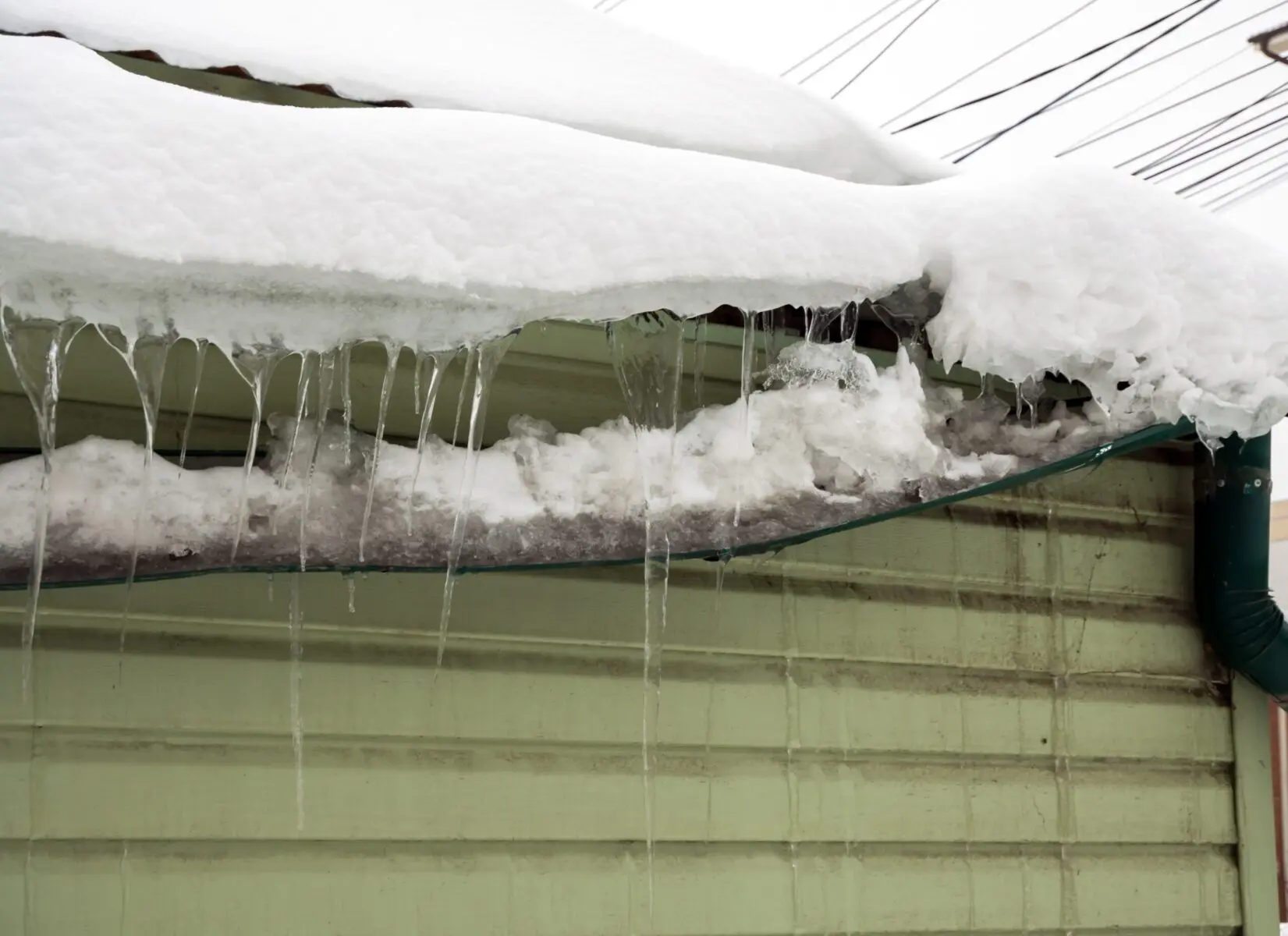
A water stain on your ceiling after a winter thaw could be the first sign of an ice dam. As melting snow refreezes along the roof edge, water backs up beneath the shingles and can leak into your home.
Mast Roofing & Construction, Inc. helps homeowners across Montgomery, Lehigh, Berks, Chester, and Bucks Counties prevent ice dam damage with inspections, repairs, and long-term roofing solutions. In this guide, we explain how to prevent ice dams with proper ventilation and gutter maintenance and when it’s time to call a professional roofer for help.
Quick Answer: How to Prevent Ice Dams on Roof
The most effective ways to prevent ice dams are:
- Seal attic air leaks to reduce heat loss.
- Add attic insulation to keep the roof evenly cold.
- Improve attic ventilation with balanced soffit and ridge vents.
- Install ice and water shield during roof replacement.
- Clean gutters before winter to improve drainage.
What Is an Ice Dam and Why Does Eastern PA Get Them?
An ice dam is a ridge of ice that forms along the edge of a roof and blocks melting snow from draining properly. As water backs up behind the ice, it can work beneath the shingles and leak into your home. Ice dam roof problems often start long before you notice a ceiling stain or active leak.
Eastern Pennsylvania is especially prone to ice dams because winter temperatures frequently rise above freezing during the day and drop below freezing at night. Combined with the region’s regular snowfall, these freeze-thaw cycles create ideal conditions for ice dams to form on roofs throughout Allentown, Reading, Pottstown, and surrounding communities.
How Ice Dams Form Step by Step
Ice dams develop when three conditions occur at the same time:
- Snow builds up on the roof.
- Heat escaping from the attic warms the roof deck and melts the snow above it.
- Meltwater flows to the colder eaves, refreezes, and gradually forms a ridge of ice.
The main cause is heat escaping through the attic, not cold weather alone. That’s why the best way to prevent ice dams on your roof starts with improving your home’s insulation and ventilation. Low-slope roof sections and north-facing dormers are also more likely to develop ice dams because they stay colder and hold snow longer.
What Damage Ice Dams Cause
As water backs up behind an ice dam, it can slip beneath shingles and into the roof system. This can cause wet insulation, stained ceilings, peeling paint, mold growth, and gutters that pull away under the weight of heavy ice. Addressing the early warning signs of shingle wear can help prevent more extensive roof damage.
How to Prevent Ice Dams on Your Roof (Long-Term Fixes)
If you’re wondering how to prevent ice dams on roof systems for the long term, focus on the underlying causes instead of temporary fixes. Improve your insulation and ventilation to keep the roof deck cold and prevent the freeze-thaw cycle that creates ice dams.
Add Attic Insulation to Stop Heat Escape
Proper attic insulation keeps warm air inside your home instead of escaping into the attic. The Department of Energy recommends R-49 to R-60 attic insulation for most Eastern Pennsylvania homes. Residential roofing services and routine roof inspections can determine if poor insulation increases your ice dam risk.
Improve Attic Ventilation So Heat Doesn’t Build Up
Attic ventilation works with insulation to keep the roof at a consistent temperature. Building codes generally call for 1 square foot of net free ventilation for every 150 square feet of attic floor area. A properly ventilated attic uses unobstructed soffit vents for intake and ridge vents for exhaust. Blocked soffit vents are one of the most common issues found during inspections.
Install Ice and Water Shield at the Eaves
Ice and water shield is a waterproof membrane installed beneath the shingles along the roof edge to help prevent leaks if an ice dam forms. Pennsylvania building code requires this level of protection in ice-dam-prone areas, but it works as a backup rather than a substitute for proper insulation and attic ventilation.
How to Prevent Ice Dams in Gutters
While gutters don’t cause ice dams on their own, clogged gutters can trap water and make ice buildup worse. If you’re wondering how to prevent ice dams in gutters, regular maintenance and targeted solutions can help reduce the risk.
Keep Gutters Clean Before Winter Sets In
Clean gutters after the leaves have fallen to help water drain before freezing weather arrives. The best time in Eastern Pennsylvania is typically in late October or early November. Also, make sure downspouts discharge water at least 4 feet away from your home’s foundation to reduce winter drainage issues.
Install Heated Gutter Cables as a Backup Measure
Heated gutter cables create a path for melting water to drain through ice, making them useful for trouble spots like low-slope roofs and dormers. However, they’re only a backup measure and won’t solve the underlying problem without proper insulation and ventilation. If you’re dealing with recurring ice dams, our team provides expert roofing in Montgomery County and throughout Eastern Pennsylvania.
What to Do When an Ice Dam Has Already Formed
If an ice dam has already formed, focus on limiting damage and avoiding unsafe removal methods. While some steps can help temporarily, severe ice dams should be handled professionally.
Safe DIY Steps to Reduce Damage Right Now
- Use a roof rake from the ground to remove snow 3–4 feet above the eaves—never climb onto an icy roof.
- Place a nylon stocking filled with calcium chloride across the ice dam to create a drainage channel. Avoid rock salt, which can damage shingles and gutters.
- Never use a heat gun, open flame, or pressure washer to remove ice.
When to Call a Professional Roofer
If water is leaking into your home or the ice dam is difficult to reach, contact a roofing professional. After the ice is removed, it’s important to inspect the roof, underlayment, and attic for hidden damage. You can schedule a post-winter roof inspection to identify any repairs needed before the next winter season.
FAQ — Ice Dam Prevention for Eastern PA Homeowners
What causes ice dams on roofs?
Ice dams form when heat escaping through a poorly insulated attic melts snow on the roof. As the water reaches the colder eaves, it refreezes and builds into a dam.
Does homeowners insurance cover ice dam damage?
Many homeowners insurance policies cover sudden water damage caused by ice dams but may exclude damage from neglect or long-term leaks. Review your policy and document any damage before cleanup.
How much does ice dam removal cost?
Professional ice dam removal in Eastern Pennsylvania varies, depending on the roof size and severity. Permanent solutions like improving insulation and ventilation generally cost more upfront but prevent recurring damage.
Can ice dams damage gutters permanently?
Yes. Heavy ice can pull gutters away from the fascia, bend hangers, and crack seams. If your gutters show signs of damage after winter, have them inspected before the next snow season.
Do heated roof cables actually prevent ice dams?
No. Heated cables help create drainage paths through the ice but don’t eliminate the conditions that cause ice dams. Proper attic insulation and ventilation remain the best long-term solution.