
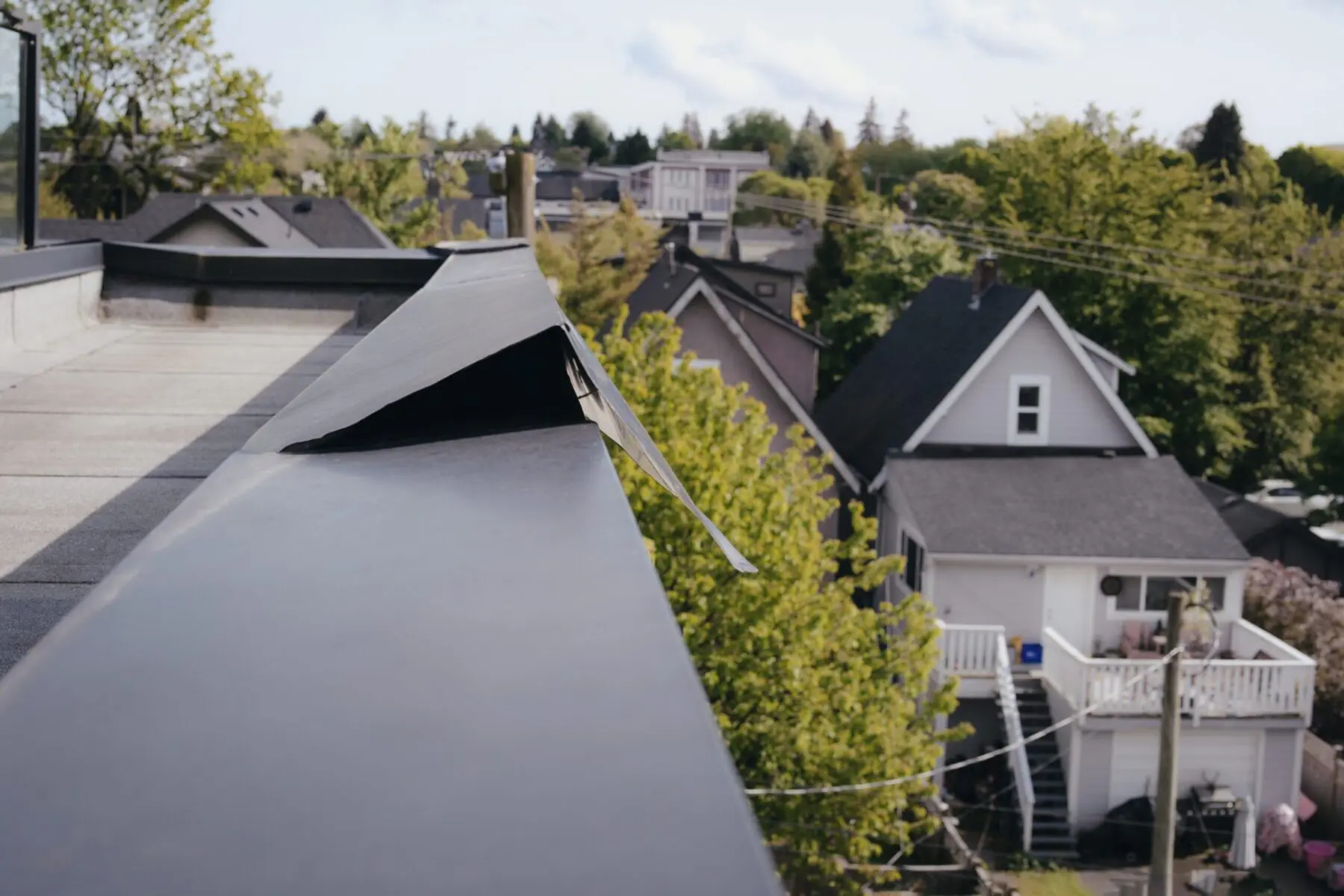
What Is Roof Flashing?
Roof flashing is thin, weather-resistant material, typically aluminum, copper, or galvanized steel, installed around roof joints and openings to direct water away from vulnerable areas. It helps prevent leaks where the roof meets walls, chimneys, skylights, vents, and valleys, protecting the underlying roofing materials and home structure from water damage.
Flashing is essential in areas like:
-
- Where walls and roof surfaces meet
-
- Roof valleys
-
- Around skylights and vents
-
- Around chimneys
-
- Along roof edges
Without flashing, water can seep under your shingles, damaging your underlayment, insulation, and even your home’s structure.
Why Is Roof Flashing Necessary?
Your roof is covered with asphalt shingles or other materials to keep out rain and weather. But shingles alone can’t do the job. Roof flashing provides an extra layer of protection that helps prevent leaks and water damage in the most vulnerable parts of your roof.
Types of Roof Flashing
Common Roof Flashing Types
-
- Continuous flashing: Protects where a sloped roof meets a vertical wall.
-
- Drip edge flashing: Installed along eaves to keep water flowing off the roof.
-
- Step flashing: Overlapping pieces that protect wall-to-roof intersections.
-
- Valley flashing: Installed where two roof slopes meet to channel water down the valley and toward the gutters.
-
- Vent pipe flashing: Cone-shaped flashing that seals around vent pipes.
Additional Roof Flashing Types
-
- Base flashing: Fits around chimneys to direct water away.
-
- Counter flashing: Works with base flashing for added protection.
-
- Cap flashing: L-shaped flashing used on windows or flat surfaces.
-
- Chimney flashing: Prevents water pooling around chimneys.
-
- Saddle flashing: Covers protruding roof structures.
-
- Skylight flashing: Protects skylight edges from leaks.
-
- Kick-out flashing: Installed at the lower end of a roof-to-wall intersection to direct water away from siding and into the gutter.
What Is Counter Flashing?
Counter flashing works with base flashing to keep water from getting behind the flashing system. It’s typically installed on walls or chimneys to ensure water is directed away from the roof structure.
What Is Drip Edge Flashing?
Drip edge flashing is installed along the edges of the roof. It helps water run off the roof without soaking into the underlying materials or fascia, preventing rot and water damage.
Does Flashing Go Over or Under Shingles?
Roof flashing can go over or under shingles depending on the type of flashing and where it is installed. For example, step flashing is integrated with each course of shingles where a roof meets a wall, while counterflashing overlaps base flashing around chimneys.
Proper placement and overlapping are essential for directing water away from roof joints and preventing leaks.
Aluminum vs. Galvanized Steel Flashing
-
- Aluminum flashing: Lightweight, corrosion-resistant, easy to install, and long-lasting.
-
- Galvanized steel flashing: More affordable but prone to rusting over time if not properly maintained.
Is Roof Flashing Required by Building Codes?
Building codes vary by location. Check with your local building department for specific requirements. However, most roofing manufacturers require flashing to be installed to maintain your warranty coverage.
How Long Does Roof Flashing Last?
Roof flashing can last for decades when properly installed, but its lifespan depends on the material, weather exposure, and maintenance. Regular roof inspections can help identify corrosion, loose flashing, or damaged seals before they lead to leaks.
Common Roof Flashing Mistakes to Avoid
-
- Improper installation or placement
-
- Skipping flashing altogether in critical areas
-
- Using the wrong material for your climate
-
- Failing to seal joints properly
These mistakes can lead to leaks, mold, and costly repairs.
Why Professional Roof Flashing Installation Matters
Working with a qualified roofing contractor ensures:
-
- Proper flashing type selection
-
- Accurate installation for leak protection
-
- Manufacturer warranty compliance
-
- Long-term durability
Flashing requirements depend on local building codes, roofing materials, and manufacturer installation instructions. Proper flashing is an important part of a complete roofing system and can affect warranty coverage.
Signs You Need Roof Flashing Repair or Replacement
-
- Water stains on ceilings or walls
-
- Visible gaps, rust, or damage on flashing
-
- Leaks during or after storms
-
- Missing or lifted flashing sections
Minor flashing damage may be repairable, while severely corroded, improperly installed, or repeatedly leaking flashing may need replacement. A professional roof inspection can help determine the extent of the damage and whether roof repairs are needed to protect the surrounding roof materials.
Get Roof Flashing Repair & Installation in Oley, PA
At Mast Roofing & Construction, we specialize in roof flashing installation and repair for homes in Oley, PA, and surrounding areas. Our team ensures your roof is fully protected from leaks and water damage.
Call (610) 689-3737 or book your inspection online to schedule your free consultation today.